Specifying
How to specify commercial trash receptacles
By the Vernwell team · Updated
Short answer
To specify a commercial trash receptacle, decide on placement and quantity first, then choose capacity, number of waste streams, opening type, footprint, materials and finish, and liner. Record each unit on the FF&E schedule with the manufacturer's item number, dimensions, finish, and lead time so procurement can order it without follow-up questions.
1. Start with placement, not the product
Receptacles get used where people naturally finish something: entrances and exits, elevator lobbies, restroom exits, food and beverage areas, gate holds, and seating clusters. Mark these on the plan before choosing a model, because placement decides how many units you need, how much capacity each one needs, and how much floor space you actually have.
Check each location against the accessible route. A freestanding unit must not narrow a circulation path below the required clear width. See our guide to ADA guidelines for trash receptacles for the dimensions.
2. Choose capacity from the service schedule
Capacity should match how often housekeeping or janitorial staff empty the unit, not the largest size available. A lobby receptacle emptied several times a day can be smaller and more refined than a back-corridor unit emptied once a night. Ask the operator for their service frequency before sizing.
Commercial receptacles are typically listed by liner capacity in gallons. Where a spec sheet lists a capacity, carry it onto the schedule.
3. Decide on waste streams
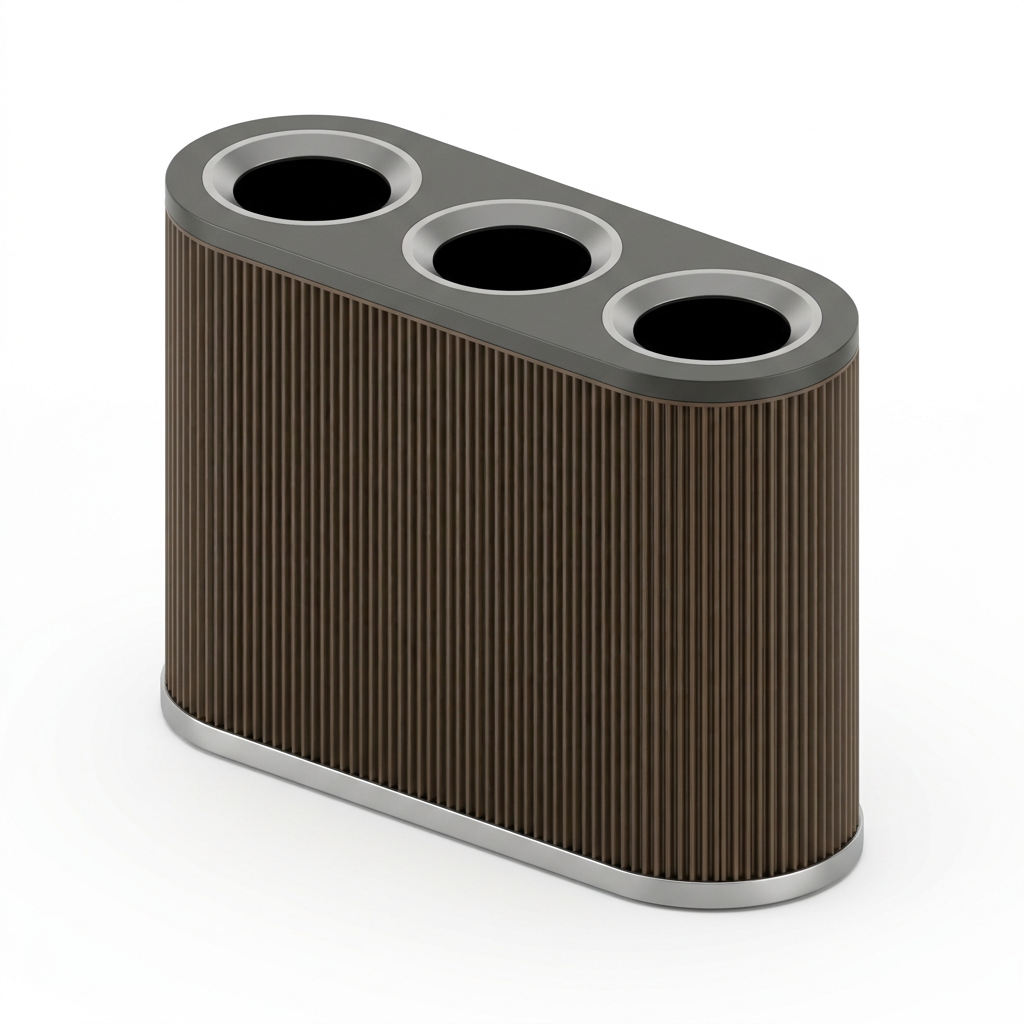
Many projects, especially those pursuing sustainability certifications or serving municipalities with recycling requirements, need separate streams for landfill, recycling, and sometimes compost. Multi-stream units keep the streams side by side in one footprint so guests sort at the point of disposal.
- Single stream: guest rooms, offices, small restrooms
- Two streams (landfill + recycling): lobbies, corridors, office pantries
- Three streams (landfill + recycling + compost or glass): food courts, cafeterias, convention centers
4. Pick the opening type
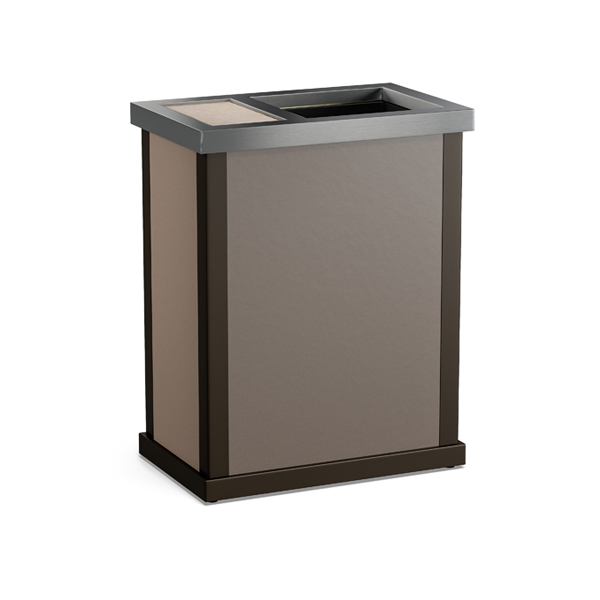
Open tops are the easiest to use and the easiest to service. Recessed or framed openings hide the liner and contents, which matters in lobbies and front-of-house spaces. Combination trash/ash units add an ash tray or urn on top for building entrances and outdoor smoking areas where local rules allow smoking.
5. Confirm footprint and height
Get width, depth, and height for every configuration and draw the unit at scale. Leave room for staff to lift out the liner, which usually needs clearance above or in front of the unit depending on how it opens. Height also affects reach for wheelchair users.
6. Specify material, finish, and trim
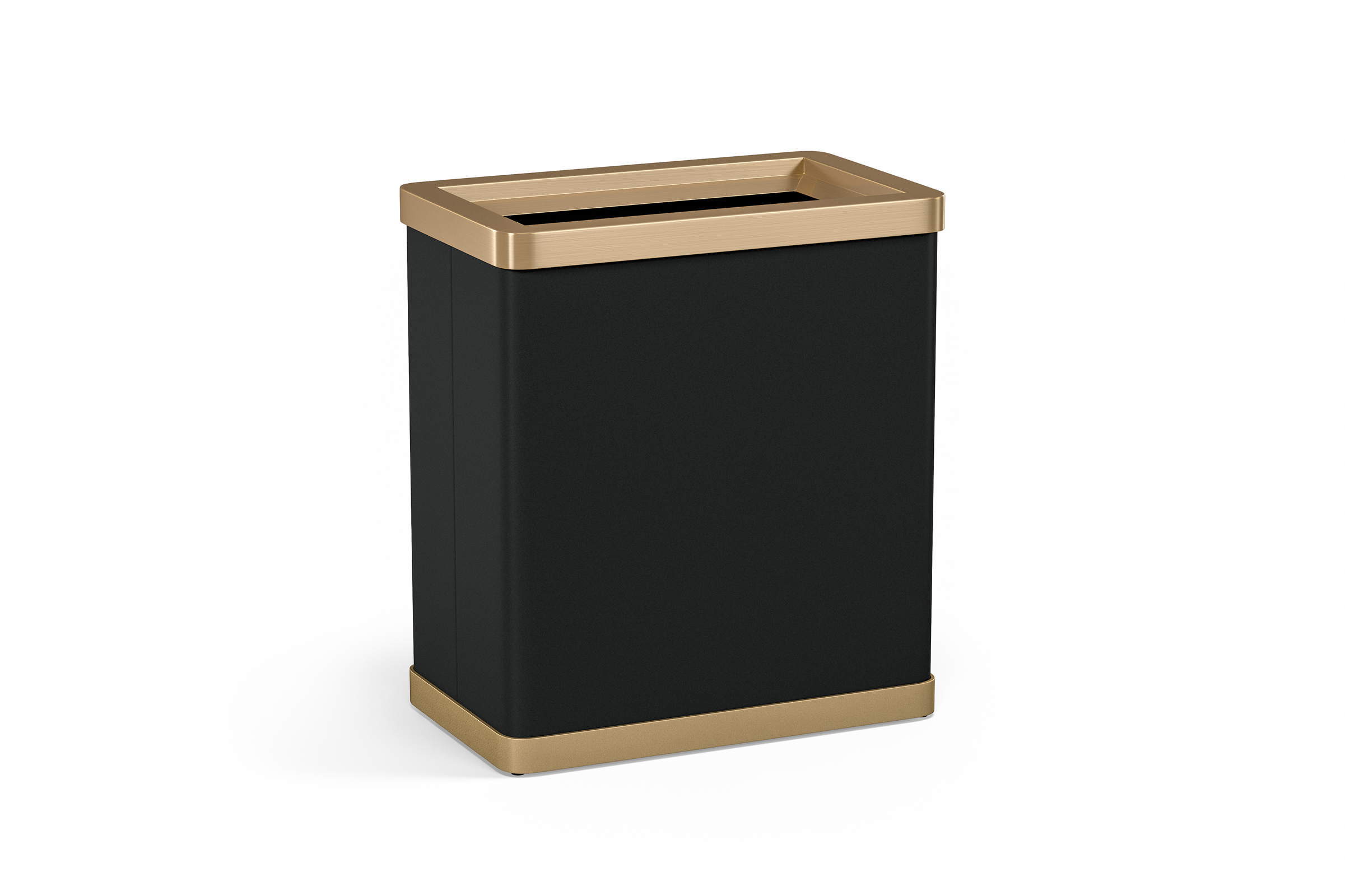
Material decides durability and maintenance; finish decides how the piece reads in the room. Powder-coated steel gives the widest color range, PVD trim adds a brass or chrome accent that resists tarnish, and stainless steel suits utilitarian or back-of-house settings. Our guides on powder coat vs. stainless steel and on PVD finishes cover the tradeoffs.
Request physical finish samples before you finalize. Colors on screen and in PDFs are approximate.
7. Write the FF&E line item completely
An incomplete line item is the most common cause of ordering delays. Each receptacle entry should let a purchasing agent order it without calling the designer.
| Field | Example |
|---|---|
| Manufacturer and model | Vernwell Cava |
| Item number | 1045 (trash only) or 1045A (with ash tray) |
| Dimensions | 27" W x 16.5" D x 33.5" H |
| Body finish | Powder coat, Carbon |
| Trim finish | Brass PVD |
| Liner | Removable galvanized steel liner (included) |
| Quantity and locations | 6: Lobby L1, elevator lobbies L2 to L7 |
| Lead time | 10 to 12 weeks from order |
8. Build lead time into the schedule
Receptacles are often ordered late because they seem minor, then arrive after opening. Made-to-order commercial receptacles commonly take 10 to 12 weeks or more, so place the order with the rest of the loose furniture package rather than at punch list.
Frequently asked questions
What information goes on an FF&E schedule for a trash receptacle?
Include the manufacturer, model, item number, dimensions, body finish, trim finish, liner, quantity, locations, and lead time. That is enough for procurement to order without follow-up questions.
How far in advance should trash receptacles be ordered?
Order them with the loose furniture package, not at punch list. Made-to-order commercial receptacles often take 10 to 12 weeks; Vernwell's standard lead time is 10 to 12 weeks for all products.
Should I request finish samples?
Yes. Powder coat and PVD colors look different on screen and in print, so approve physical samples against your finish schedule before ordering.